
I have a confession.
I am writing my upcoming book, Money for Makers: The Financial Playbook for Creators & Entrepreneurs, with AI.
In fact, I'm writing this post with AI. Every idea is mine. Every call about what stays and what goes is mine. The structure, the voice, the years of client conversations baked into every sentence — mine. But AI got me through my drafts faster than I ever could have alone.
I'd never use it for my screenplays. The best creative work comes from a subconscious current you can't plan or prompt. But for non-fiction, where the job is organizing what's already known? It earns its place.
I'm telling you this because I'd be a hypocrite making the case for human judgment without it.
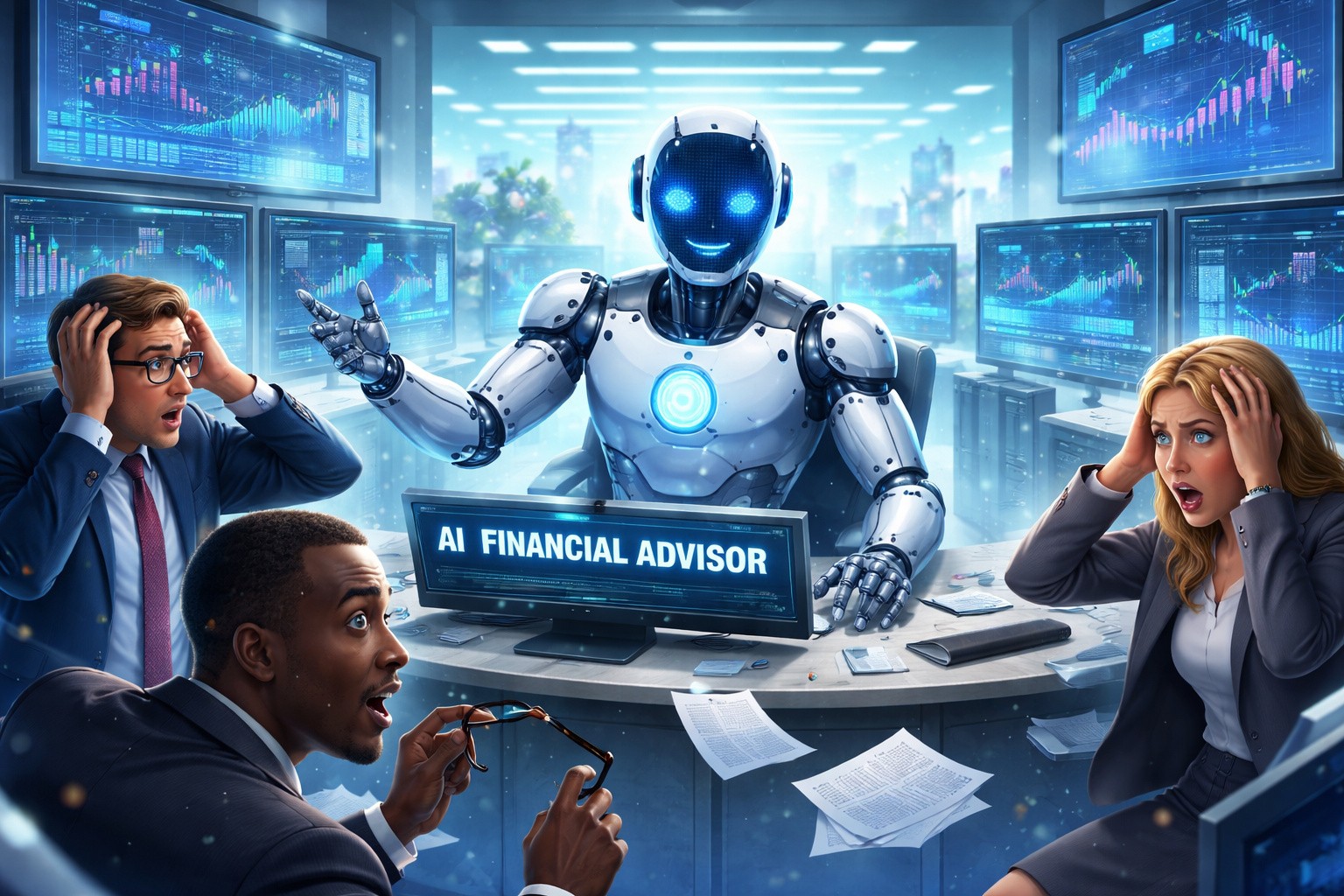
So let's talk about AI and financial planning.
Because this comes up a lot. People on the internet are very confident in both directions and the honest answer is more useful than the hot take.
What AI Does Well
Financial planning has two parts. The first is quantitative: the math, the projections, the tax optimization, the account mechanics. How much should I contribute to my SEP-IRA this year? What's the break-even on an S-Corp election? How long will my runway hold if revenue drops 30%?
AI handles this part well. If quantitative planning is all you need — and you're disciplined enough to actually follow through — that might be enough.
What AI Doesn't Do
The second part of financial planning is harder to name but easier to recognize.
It's the reason people call their advisor at 10pm when the market drops 15%. It's the reason a good planner knows to ask about the divorce before running the numbers. It's the reason someone is still invested when everyone around them is selling.
This part is behavioral. And AI doesn't do that well.
The research on investor behavior is pretty consistent: people are bad at managing their own money — not because they're unintelligent, but because they're human. We overreact to short-term news. We hold losers too long and sell winners too soon. We panic when markets fall and get greedy when they rise. We make financial decisions based on fear, guilt, hope, and what our siblings are doing.
AI can tell you what to do. It can't stop you from doing the opposite.
A good advisor sits with you in the hard moments and asks the question you're avoiding. They hold the plan down when you want to abandon it. A prompt can't do that. Well, it can try, but to know when AI financial advice is sound — and when it's missing something important about your specific situation — you need enough of a foundation to evaluate what you're being told.
People have made genuinely harmful decisions based on AI guidance, not because the AI was malicious, but because they couldn't recognize when the advice didn't fit. A tool is only as useful as the person holding it.
The Case for a Human
I'm biased here. I'll say that plainly — I run a financial planning practice, and I believe in what I do.
The advisors who have the most to worry about from AI are the ones whose value is purely technical. If your whole contribution is building a spreadsheet and telling someone what accounts to open, AI does that now. That version of the job is commoditized.
But what isn’t is knowing you. Over time, a good advisor figures out that your biggest financial fear isn’t the one you said out loud. Through thoughtful questioning, they start to understand where you relationship with money actually comes from. They keep you from the kind of mistake you can't recover from for a decade. The kind of mistake that seems obvious in retrospect and invisible in the moment.
The best financial relationships I've seen — the ones that actually change people's lives — are built on trust. Not data. Trust.
Working with a financial planner means handing something you don't want to do to someone who loves doing it. Your job is creating, building, making. Their job is keeping the financial engine running so you can focus on yours. For people who build things for a living, it's one of the smartest uses of money there is.
AI is a powerful tool. I use it. You should use it too. But a tool doesn't replace a real relationship.
Most people, if they're honest with themselves, need more of the human side than they think.
Money for Makers: The Financial Playbook for Creators & Entrepreneurs is coming soon. If you want first access when it drops, you can get a spot on the list here:
Drew Feldman is an Accredited Portfolio Management Advisor™ and founder of WideFrame Wealth, a financial planning practice for creators and entrepreneurs.